Predictive Analysis of CO2 Emissions and Public Health Impact
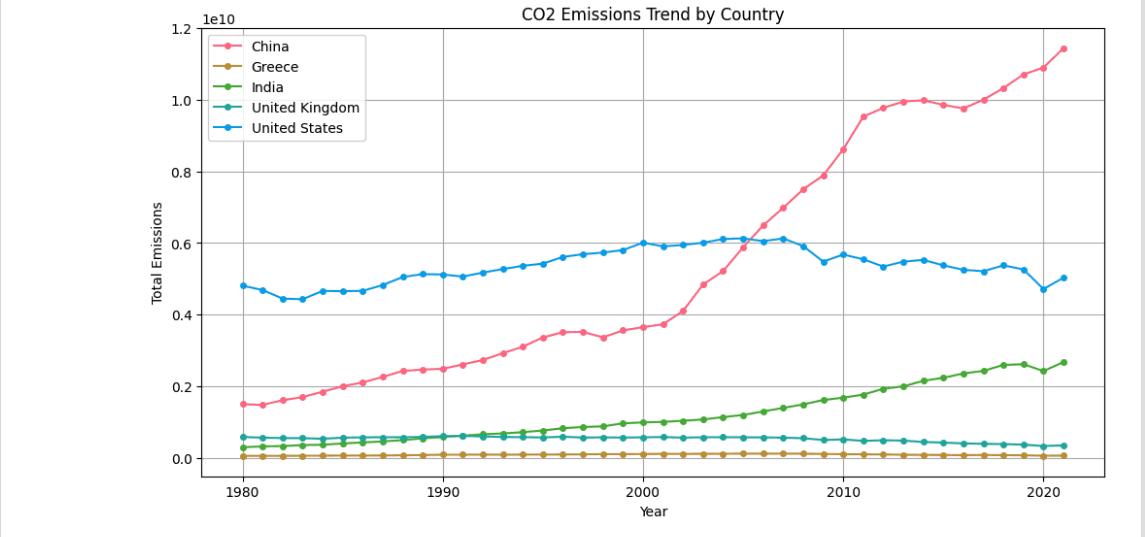
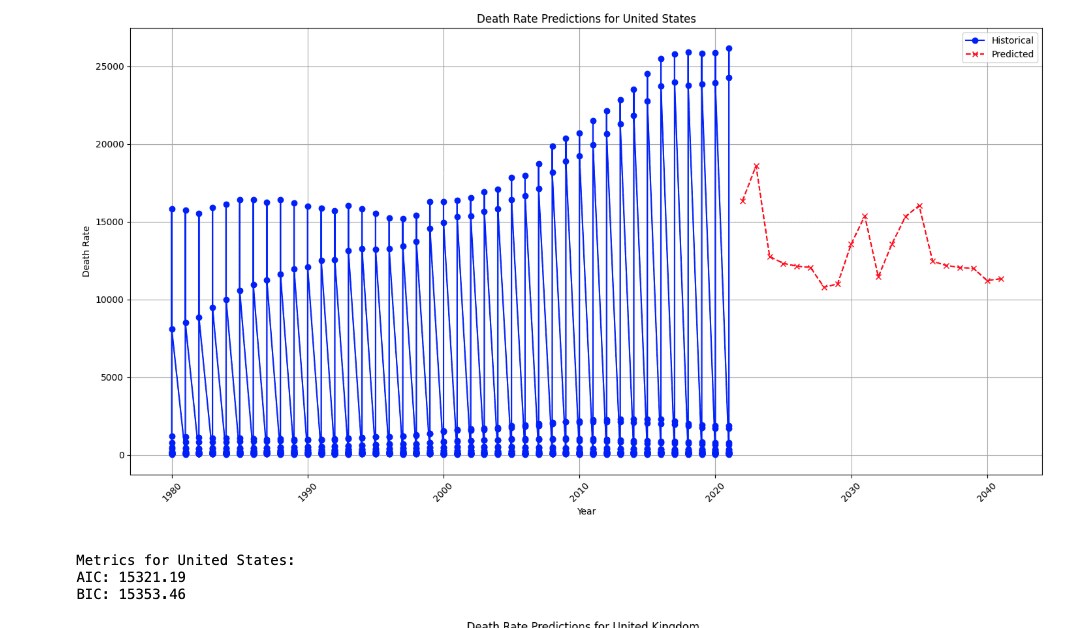
CO2 Emissions and Mortality Rate Analysis
The Challenge
Can we quantify the health impact of carbon emissions? I investigated the connection between CO2 emissions and mortality rates to identify which emission sources pose the greatest public health risks.
The Solution
I developed a comprehensive statistical framework that merges multiple global datasets to analyze and forecast the relationship between various CO2 emission sources and mortality rates across different countries.
Key Findings
✅ Strong correlation between specific CO2 sources and mortality rates
✅ Coal emissions identified as primary contributor to negative health impacts
✅ India showed highest projected mortality rates related to emissions
✅ Cement sector emerged as major contributor to coal consumption in India
Technologies Used
Data Analysis: Python, Dask, NumPy, Pandas
Statistical Modeling: PyMC3, SARIMA, Bayesian Hierarchical Models
Machine Learning: PyTorch, Scikit-learn
Visualization: Plotly, Matplotlib, Seaborn
Methodology
The analysis follows a structured approach:
Multi-Source Data Integration – Merged datasets from emissions, health, and economic sources
Bayesian Modeling – Implemented hierarchical models to understand causal relationships and account for uncertainty
Time Series Forecasting – Used SARIMA models to project future mortality rates based on emission trends
Data Insights
Emission Source | Mortality Correlation | Regional Impact |
|---|---|---|
Coal | Very High | East Asia, India |
Oil | Moderate | North America, Europe |
Gas | Low | Middle East, Russia |
Cement | High | India, China |
Visual Discoveries
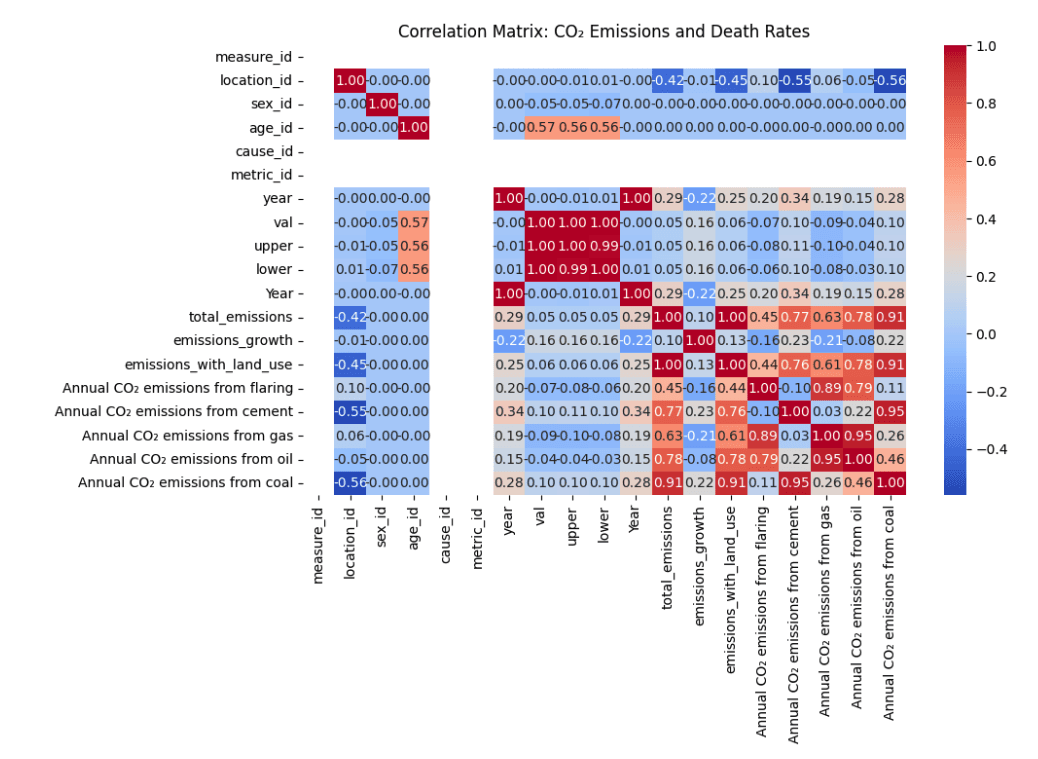
This visualization reveals how different emission sources contribute to mortality rates across regions, with coal showing the strongest correlation to negative health outcomes.
Impact & Applications
This research provides valuable insights for:
Policy makers developing targeted emission reduction strategies
Public health officials allocating resources for environmental health initiatives
Industry leaders prioritizing cleaner production methods
Environmental scientists modeling climate-health relationships
"The analysis demonstrates that focusing on coal emission reduction, particularly in developing economies, could yield the greatest public health benefits."
Future Research Directions
Incorporating additional environmental factors (PM2.5, NO2)
Developing predictive models with greater regional specificity
Analyzing potential impact of emission reduction strategies
This project combines advanced statistical methods with comprehensive environmental data to quantify the relationship between carbon emissions and public health outcomes.